c) Engineering Diploma in Applied Artificial Intelligence
c) Engineering Diploma in Applied Artificial Intelligence
Build AI. Engineer the Future.
Programme Overview
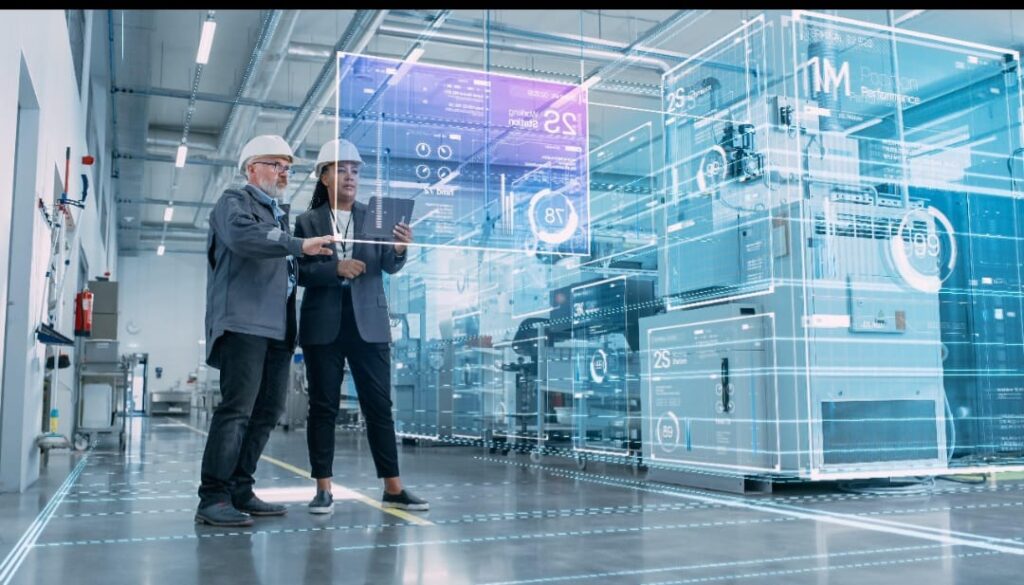
The Engineering Diploma in Applied Artificial Intelligence is a comprehensive, industry-oriented programme designed to equip engineering graduates with the knowledge and practical skills required to design, develop, deploy, and manage intelligent systems across modern industries.
The programme combines Artificial Intelligence, Machine Learning, Deep Learning, Data Science, Generative AI, Cloud AI, AI Engineering, and domain-specific engineering applications to develop AI-enabled professionals capable of solving real-world industrial and engineering challenges.
Rather than treating Artificial Intelligence as a standalone technology, the programme focuses on applying AI within the learner’s engineering discipline. It connects existing engineering knowledge with data-driven technologies, intelligent systems, automation, analytics, and modern AI applications.
Why This Programme?
Artificial Intelligence is transforming almost every engineering function, from manufacturing and infrastructure to healthcare, electronics, aerospace, energy, and enterprise technology. Engineers who understand how to combine their domain expertise with Artificial Intelligence are increasingly positioned to contribute to the development of smarter, more efficient, and data-driven systems.
This programme is designed around that transformation. Learners first develop a strong common foundation in Artificial Intelligence, programming, data, analytics, and Machine Learning before progressing into advanced AI engineering and engineering-discipline-aligned specialization pathways.
The learning experience brings together:
Engineering + Data + AI + Industry Applications
What You Will Learn
The programme follows a progressive learning journey that takes learners from foundational AI concepts to advanced technologies and engineering applications.
AI & Data Foundations
Learners build the core knowledge required to work with modern AI systems. This includes programming, mathematical foundations, data management, analytics, and fundamental Artificial Intelligence concepts. These foundations provide the technical base required to understand how data is collected, processed, analyzed, and transformed into intelligent solutions.
Machine Learning & Deep Learning
Learners develop a practical understanding of how intelligent models are designed, trained, evaluated, optimized, and applied to real-world engineering problems. The programme progresses from fundamental Machine Learning approaches to neural-network-based Deep Learning, enabling learners to develop models capable of identifying patterns, making predictions, and supporting intelligent decision-making.
Natural Language Processing & Computer Vision
Learners explore AI systems capable of understanding and processing language, images, video, documents, and multimodal information. These technologies enable applications such as automated document analysis, visual inspection, intelligent search, image classification, language-based assistants, and other AI-powered engineering solutions.
Time Series & Predictive Analytics
Many engineering systems generate continuous streams of sequential data. This component introduces learners to Time Series analysis and Predictive Analytics for identifying patterns, forecasting outcomes, detecting anomalies, and supporting predictive decision-making.
These capabilities can be applied to areas such as equipment monitoring, demand forecasting, process analysis, energy management, operational planning, and predictive maintenance.
Cloud AI Engineering
Learners understand how modern AI solutions are developed and deployed using cloud platforms and enterprise AI services. The programme introduces the principles of cloud-based computing, data processing, AI services, application deployment, scalable infrastructure, and production-oriented AI environments.
This helps learners move beyond local experimentation and understand how AI applications can be operated within modern enterprise environments.
AI Engineering & MLOps
The programme moves beyond model development into production-ready AI engineering. Learners explore the complete Machine Learning lifecycle, including data pipelines, experimentation, model management, deployment, monitoring, automation, and AI infrastructure.
This enables learners to understand how AI models are transformed into reliable systems that can be integrated into practical engineering and industrial workflows.
Generative AI, LLMs & AI Agents
Learners explore modern Generative AI technologies and their applications across engineering and enterprise environments. The programme introduces Large Language Models, Retrieval-Augmented Generation, vector search, AI agents, tool calling, intelligent automation, and enterprise AI integrations.
The focus is on understanding how these technologies can be applied to create intelligent assistants, knowledge systems, engineering support applications, automated workflows, and domain-specific AI solutions.
Responsible & Explainable AI
Modern AI systems must be reliable, transparent, secure, and responsible. Learners therefore develop an understanding of Explainable AI, fairness, privacy, security, governance, risk management, and responsible AI practices.
This ensures that AI solutions are evaluated not only for technical performance but also for their reliability, transparency, safety, and suitability for real-world deployment.
Engineering-Aligned AI Specialization
A defining feature of the programme is its engineering discipline-aligned learning pathway.
After establishing a common AI foundation, learners apply Artificial Intelligence technologies to their own engineering domain through specialized projects, datasets, software platforms, laboratories, industry cases, and capstone experiences.
Specialization pathways can span areas such as Computing & Software Intelligence, Electronics, Electrical & Embedded Intelligence, Mechanical, Manufacturing & Robotics Intelligence, Civil & Smart Infrastructure Intelligence, Chemical & Process Intelligence, Life Sciences & Healthcare Intelligence, and Design, Materials & Specialized Engineering Intelligence.
This approach enables learners to apply AI to problems they already understand while developing the additional technical capabilities required to transform those problems into intelligent, data-driven systems.
Learn Through Real-World Projects
The programme emphasizes application-oriented learning rather than relying on theory alone. Learners work with practical engineering and industrial problems where Artificial Intelligence can provide measurable improvements in prediction, automation, inspection, optimization, monitoring, and decision-making.
Projects may involve predictive maintenance, intelligent quality inspection, engineering analytics, smart manufacturing, Computer Vision, digital twins, intelligent infrastructure, process optimization, autonomous systems, healthcare and bioengineering applications, smart agriculture, enterprise AI, Generative AI applications, and AI-powered decision intelligence.
As learners progress, projects move from guided applications toward more independent and domain-specific engineering solutions.
Industry Technology Exposure
Learners gain hands-on exposure to technologies used throughout modern AI development and deployment ecosystems. The technology environment includes Python, SQL, Power BI, Tableau, Scikit-learn, TensorFlow, Keras, PyTorch, OpenCV, Hugging Face, LangChain, LangGraph, LlamaIndex, FAISS, Cloud AI Platforms, MLflow, Docker, Kubernetes, and GitHub Actions.
The technology stack is designed to support the complete AI lifecycle, taking learners from data preparation and experimentation through model development, application engineering, deployment, monitoring, and production AI.
From Learning to Deployment
The programme follows the complete lifecycle of an AI solution:
Problem Identification → Data → Analysis → Model Development → Evaluation → Engineering → Deployment → Monitoring → Optimization
This end-to-end approach helps learners understand that successful AI implementation involves much more than developing a model. They learn how to identify meaningful problems, prepare appropriate data, develop and evaluate models, engineer AI applications, deploy them into practical environments, monitor their performance, and continuously improve the solution.
Capstone Experience
The programme culminates in a domain-specific AI capstone project where learners apply their engineering knowledge and AI capabilities to a meaningful real-world problem.
Learners identify an engineering challenge and develop an end-to-end intelligent solution incorporating appropriate AI technologies, data, validation, visualization, deployment, and technical documentation.
Depending on the learner’s specialization, capstone projects may explore areas such as AI-powered quality inspection, predictive maintenance platforms, smart infrastructure systems, intelligent transportation, engineering decision-support systems, digital twin applications, AI-powered healthcare systems, autonomous systems, process optimization, and enterprise AI assistants.
The capstone demonstrates the learner’s ability to translate an engineering challenge into a practical and deployable AI solution.
What You Will Be Able to Do
By the end of the programme, learners will be able to understand and apply core Artificial Intelligence concepts while developing Machine Learning and Deep Learning solutions for real-world problems. They will be able to work with structured, unstructured, sequential, visual, and textual data and develop AI applications using modern development frameworks.
Learners will also be able to develop Generative AI and Large Language Model-powered applications, build Retrieval-Augmented Generation systems and AI agents, and deploy AI solutions using cloud and production technologies.
The programme further enables learners to apply MLOps and AI Engineering principles, evaluate and monitor AI systems, improve model performance, implement responsible and explainable AI practices, integrate AI into engineering workflows, and develop end-to-end intelligent solutions for domain-specific industrial problems.
The Learning Philosophy
We believe the future belongs not simply to people who know Artificial Intelligence, but to people who understand where and how AI can create meaningful value.
That is why this programme moves beyond isolated AI concepts and focuses on developing the ability to identify engineering problems, work with data, select appropriate AI technologies, develop intelligent solutions, engineer them for deployment, and apply them within real-world industrial environments.
The programme brings together engineering expertise and Artificial Intelligence to help learners progress from problem identification to intelligent solution development.
Engineering Knowledge. AI Capability. Industry Impact.
The Engineering Diploma in Applied Artificial Intelligence is designed to help engineers move from traditional engineering problem-solving toward AI-enabled engineering, intelligent automation, data-driven decision-making, and next-generation industrial innovation.
Outcome-Driven Curriculum
Learn skills that matter through age-appropriate and organization-specific curricula, with hands-on exposure across every aspect of AI designed to help learners advance beyond conventional education and corporate training.
Hybrid Learning & Industry Mentorship
5 Days Recorded + 2 Days Live with Industry Mentors — learn through structured recorded sessions led by industry-exposed academicians, complemented by live sessions with industry mentors for practical guidance and deeper learning.
Learners who Build lead to Transformation
Making AI education practical, future-ready, and impact-driven by empowering learners to turn knowledge into skills, skills into solutions, and solutions into meaningful impact.